Description
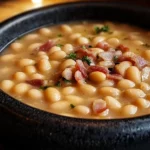
This hearty, soul-warming dish brings out the best in humble Great Northern beans, slowly simmered with aromatic herbs, savory ham, and a touch of spice. Whether served as a main dish or a side, these beans offer comfort in every spoonful and are perfect for chilly evenings or nourishing family meals.
Ingredients
1 pound dried Great Northern beans (or navy beans)
6 cups water or chicken broth
1 small onion, diced
2 cloves garlic, minced
1 smoked ham hock (or 4 slices of thick-cut turkey bacon, chopped)
1 bay leaf
1 teaspoon dried thyme
1 teaspoon smoked paprika (optional, for extra depth)
1/2 teaspoon black pepper
Salt to taste (add later to avoid toughening the beans)
1 tablespoon olive oil or butter (optional, for richness)
Optional Add-Ins
1 cup diced carrots (for a touch of sweetness)
1 cup diced celery (for added flavor)
1/2 teaspoon red pepper flakes (for a slight kick)
Instructions
Step 1: Prepare the Beans
Rinse the dried beans thoroughly under cold water and remove any debris. Soaking the beans overnight is optional but helps reduce cooking time and improve texture. If soaked, drain and rinse before cooking.
Step 2: Add Ingredients to the Slow Cooker
Place the rinsed beans into your slow cooker. Add the diced onion, minced garlic, chicken ham hock or turkey bacon, bay leaf, thyme, smoked paprika, and black pepper. Pour in the water or chicken broth, making sure the beans are covered by at least 2 inches of liquid.
Step 3: Slow Cook
Cover and cook on LOW for 8 to 10 hours or on HIGH for 4 to 6 hours, until the beans are tender and creamy. Check the liquid level occasionally and top up if necessary to keep the beans fully submerged.
Step 4: Season and Serve
When the beans are cooked through, remove the chicken ham hock and shred any meat, returning it to the pot. Season the beans with salt to taste and drizzle with olive oil or stir in butter for added richness. Serve warm, optionally garnished with fresh herbs like parsley or sliced green onions.
Notes
These beans are versatile and can be enjoyed on their own, with cornbread, over rice, or alongside roasted meats. Leftovers improve in flavor over time and freeze well for future meals. Adjust seasonings and add-ins to suit your taste or pantry staples.